
Jewish Law
Why Jews Wear Costumes on Purim: Ancient Sources, Halachic Limits, and Hidden Meanings
From ancient disguises to modern costumes — uncovering the spiritual symbolism, historical origins, and halachic boundaries of dressing up on Purim
- Rabbi Shai Amar
- |Updated
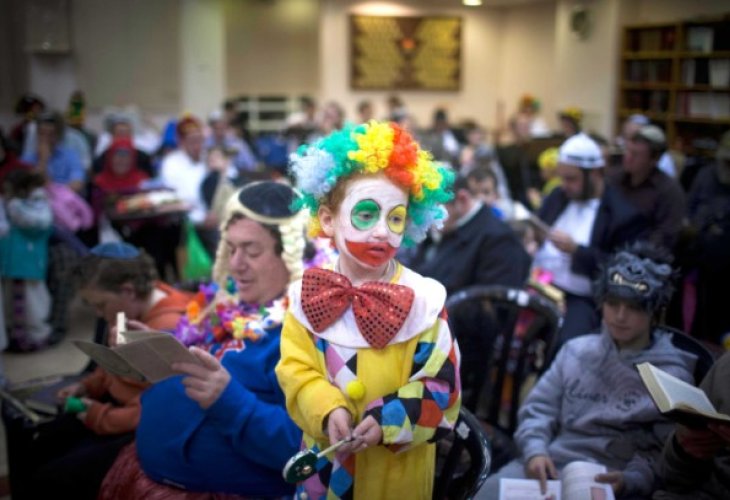
The custom of wearing costumes on Purim is an ancient Jewish practice, mentioned even in the writings of the halachic authorities.
While today this joyful custom is most visibly continued by children, in earlier generations even great Torah scholars participated in dressing up on Purim to express joy and celebrate the miracles of the day.
The Talmud (Shabbat 72b) states: “Ravah bar Huna said: Parmi,”
and Rashi explains that this refers to a mask tied over the face to playfully frighten small children. The word Parmi is understood by later commentators as an allusion to Purim, serving as an early source for the custom of wearing masks and costumes.
The Rema’s Humble Costume
A famous story is told about Rabbi Moshe Isserles (the Rema), who passed away at age 33, on the 33rd day of the Omer, after authoring 33 works. At his funeral, the eulogizer struggled to find one more unique praise to complete the number 33 — until someone recalled the Rema’s Purim custom: “Each Purim, the Rema would disguise himself as a poor man, walk through the streets asking for water to wash his hands, and remind people to come pray the evening service (Maariv) after the Purim feast,
lest they forget in their joy.”
This simple, sincere act was declared the Rema’s thirty-third virtue — his final crown of humility and devotion.
Reasons for the Custom of Costumes
The halachic and mystical sources offer several explanations for this beloved Purim tradition:
Symbol of Hidden Miracles —
The story of Purim itself is filled with disguise and concealment: Esther hid her identity, Mordechai concealed his plan, and God’s name is hidden throughout the Megillah. Our costumes mirror this divine “disguise.”Biblical Parallels of Disguise —
As explained in Eliyahu Rabbah, many turning points in Jewish history occurred through acts of disguise:Yaakov disguised himself as Eisav to receive the blessings;
Vashti’s downfall came when the angel Gabriel altered her appearance;
Esther concealed her nationality when taken to the king’s palace.
By dressing up, we symbolically express that all disguises in Jewish history were part of God’s plan for salvation.
Transforming Judgment into Mercy —
Some Kabbalists explain that disguising ourselves on Purim reflects the transformation of harsh judgment into hidden kindness — the mask of severity concealing divine mercy.
Costumes that Cross Genders
Rabbi Ovadia Yosef ruled (Yechaveh Da’at, vol. 5) that one must avoid dressing boys in girls’ clothing or vice versa, because of the Torah prohibition “A man shall not wear a woman’s garment” (Devarim 22:5), and due to the obligation of educating children properly.
However, the Steipler Gaon (Rabbi Yaakov Yisrael Kanievsky) ruled, as cited in Orchot Rabbeinu, that children below the age of education (under 6 or 7) may be dressed in such costumes, but once they reach educational age, parents should refrain.
Negative or Inappropriate Costumes
The Steipler Gaon shared a story: In his yeshiva, students would perform a Purim play each year, dressing as Achashverosh, Mordechai, and Haman. Strangely, the boy who dressed as Haman always had a difficult year in his studies and would eventually leave the yeshiva. From this he advised to avoid dressing as wicked or impure characters.
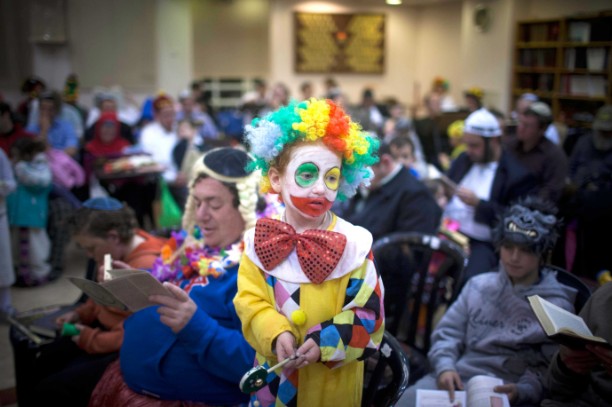
On the other hand, when a rabbi once prohibited dressing as a clown — claiming the character was rooted in non-Jewish festivals of revelry, the Steipler disagreed and responded: “It is permitted to dress as a clown; this has been the Jewish custom for generations.”
Purim joy, he explained, is holy joy, and when done with innocence and happiness, even laughter becomes a mitzvah.


