
Jewish Law
How to Kosher Liver Correctly: Complete Guide to Jewish Laws of Liver Roasting
Learn the halachic rules for preparing kosher liver, Ashkenazi and Sephardi customs, health considerations, and common mistakes to avoid
- |Updated
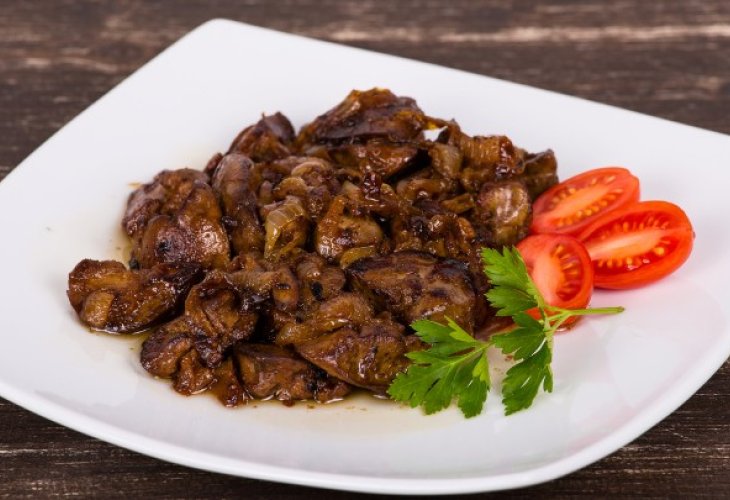
The liver — whether from an animal or a bird, contains an exceptionally large amount of blood. It can be made kosher only through roasting over an open flame, rather than salting as is done with other meats.
It is permitted to leave liver unkoshered for up to 72 hours before roasting. However, after roasting, the liver may not be cooked (such as by boiling or frying).
Frozen Liver
Some authorities rule that frozen liver must be thawed before roasting, while others are lenient. In any case, one must not thaw or roast liver by placing it in boiling water or in a microwave oven.
Likewise, do not roast liver wrapped in aluminum foil or in any other type of covering — even if perforated.
Preparing Liver for Roasting
The liver should be rinsed thoroughly with water. According to Sephardic custom, rinsing is not required unless the liver will later be cooked after roasting.
After rinsing, allow it to drain briefly until no excess water remains, and it is customary to sprinkle a small amount of salt on the liver just before roasting.
Health Considerations
If a person is medically prohibited from consuming salt, they may roast the liver without salting it, following the ruling of the Ben Ish Chai (Parashat Acharei Mot).
The Roasting Process
The liver should be roasted directly over a medium flame or glowing coals (such as on a grill), placed on a metal grate or skewer.
It is forbidden to roast liver in a microwave oven. When roasting beef liver, ensure that the cut side faces downward, allowing the blood to drain properly.
Roasting with Other Meat
Liver should not be roasted together with other meat, because it releases more blood, which can be reabsorbed by the meat already purged of its own blood. Therefore, they should not share the same skewer.
However, if it was done by mistake, the meat remains permitted.
Roasting Multiple Livers
It is permissible to roast many livers at once, but one should avoid stacking them directly on top of each other. The liver may be turned occasionally so it roasts evenly on all sides, but do not flip it too quickly — allow time for the blood to drain out.
New, uncooked livers should not be placed on top of those already roasting.
Handling Utensils and Ashkenazi vs. Sephardi Customs
According to Ashkenazi custom, one may not use the same knife that cut raw liver to cut cooked or roasted liver, even after it has been removed from the fire while still hot. Therefore, Ashkenazim designate special utensils for roasting liver.
According to Sephardic custom, as ruled in Shulchan Aruch (Yoreh De’ah 76), this is not required, and even the knife is not rendered forbidden. Thus, a Sephardi may remove the skewer during roasting to inspect or adjust the fire. For Ashkenazim, this should not be done initially.
Degree of Roasting
The liver must be roasted until it is fully edible from the roasting itself, and its outer surface appears dry. It need not be charred or blackened.
After Roasting
Once roasting is complete, remove the liver from the skewer or grate.
Ashkenazim: The liver should be rinsed three times with water after roasting.
Sephardim: If the liver is eaten roasted, no rinsing is required.
As for the skewer — and according to some, also the grate — used for roasting:
Ashkenazim must purge it by direct fire (libun) before reusing it.
Sephardim are not required to do so.

