
For the Woman
From Loss to Strength: How Anat Nagar Transformed Grief Into a Life of Faith and Empowerment
The powerful journey of a widowed mother of six who rebuilt her life through resilience, coaching, and unshakable belief
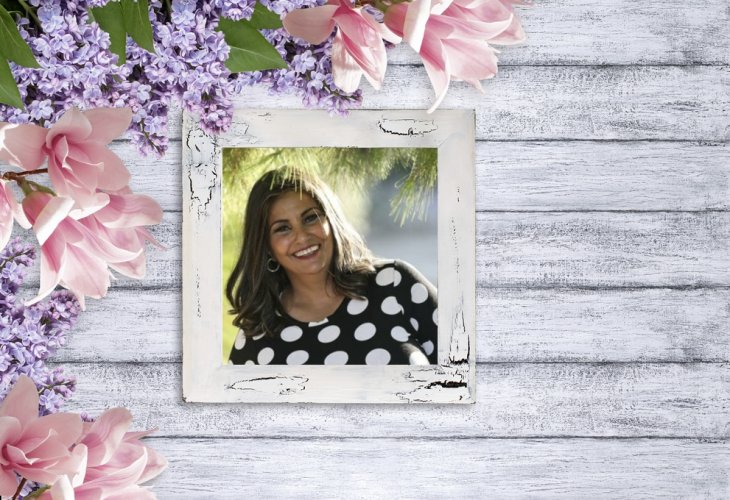 (Inset: Anat Nagar)
Nothing in the life of Anat Nagar — mother of six, grandmother, nurse, and personal coach, can be taken for granted. Not her profession, not the fact that she is a Haredi woman, and certainly not the deep joy she radiates wherever she goes.
Anat was born in Moshav Tzalfon, near Jerusalem. Growing up in the 1970s, she witnessed the second generation of Yemenite immigrants, many of whom drifted from their parents’ traditions and left religious life.
“The atmosphere in the moshav was very permissive,” she recalls. “It felt like Judaism belonged only to our grandparents. Nearly every child around me enlisted in the army and then went in directions completely detached from Judaism. I could easily have slipped together with them. I don’t know why, but somehow, Hashem protected me. I had an inner pull toward Judaism. When my friends went out to clubs and parties, I would travel to Bnei Brak, stroll down Rabbi Akiva Street, feel the holiness there, and connect to it. Today, when I guide mothers whose children are drifting away, I tell them: ‘Just show them the beauty. Let them feel how beautiful Torah life is. Show them that keeping mitzvot enriches them, not restricts them. Torah is not only obligations — there is so much goodness in it.’”
Alone in the World
Later on, Anat chose to study nursing and began working at Shaare Zedek Medical Center. Around the same time, she married her husband, who came from a religious family.
“We tried to grow spiritually together,” she says, “but at that stage, neither of us belonged to any defined world. We lived in central Jerusalem and didn’t really know where we were headed. We wanted to be part of the Haredi world, but felt very far from it — maybe even afraid of it.”
When their eldest son turned three, they began looking for a school. “I desperately wanted to send him to a Talmud Torah, but I didn’t dare say it out loud. Both my husband and I were not from a typical Haredi background — why would they accept our son? But then a truly amazing bit of Divine help came. Our rabbi connected us to a well-known Talmud Torah in Ramat Shlomo — and to our shock, they accepted us. That led us to move into the neighborhood, and very quickly we became part of the community and of the Haredi world.”
The next years were the happiest of her life. “My husband served as a career soldier in the IDF, and I worked as a nurse in the hematology department at Shaare Zedek. We had five more children. Life was calm and beautiful. I couldn’t have asked for anything better.”
Then everything changed. One day, when her husband came home, Anat sensed something was wrong. “To this day, I can’t explain what set off my intuition. He teased me because he felt perfectly fine — stronger than most men his age. But I insisted. As a nurse who had seen many difficult cases, something in my heart told me that this was serious. I begged him to get checked.”
She never imagined the results would be so devastating. “Within two weeks, we learned he had a malignant tumor,” she says.
“From that moment, our world turned upside down.”
Her husband was hospitalized at Shaare Zedek — where she herself worked. He underwent grueling treatments for four months, then entered surgery that was supposed to help him — but tragically, he never recovered.
At just 40 years old, Anat became a widow, left with six children — the youngest only seven. Life would never be the same.
 (Photo: shutterstock)
“Hashem Gave Me Extraordinary Strength”
Together with her husband’s passing, Anat found herself facing a deep spiritual struggle.
“I always believed in Hashem,” she says. “But my faith had always come from gratitude and joy because I had a wonderful life. After my husband passed away, I began to understand that part of my mission as a Jewish woman is to look inward and thank Hashem even for the hardships — for the tests, the unimaginable pain, because everything comes from Him, and only He knows what is truly good for us.”
She decided to leave her job at Shaare Zedek. “It was too hard to walk every day into the place where my husband was treated and where he passed away. It was also hard to continue interacting with families in deep pain. I looked for a different kind of mission. That connected me to personal coaching — a field I had begun studying years earlier. Until then I coached on the side, but after his passing, it became the center of my life.”
Anat says that the women who came to her for coaching actually strengthened her. “I felt that all eyes were on me. The women I coached wanted to see how I handled real-life pain. I understood that this was the moment I could help them the most. Of course, it was not easy — there is nothing more painful than being the one who has to learn with your sons because they no longer have a father to do it with them; or running a Shabbat table alone; or later on — walking your children down the aisle without the person closest to you.”
There were the daily struggles as well. “Running a home with six children is extremely hard. Looking back, I am absolutely certain that Hashem gave me special strength to get through those years.”
“Real Success Is Enjoying the Journey”
Coaching has been Anat’s main work ever since, along with giving regular Torah classes.
“Now I know that a positive outlook is the foundation of all coping,” she says. “That’s the message I give women. We all have reasons to blame others, to sink into sadness — none of us has an easy life. But what does that help? It leads nowhere. So I developed a coaching method based on one idea: ‘The past is gone. The future is unknown. The present is still here.’ Focus on what you have, and be grateful.”
She gives workshops and lectures on success and empowerment, and her key words are “change” and “success.”
With her medical background, she shares a powerful analogy: “In medicine, our DNA is concentrated in the bone marrow. If you want to know someone’s genetic condition, you examine the marrow. Spiritually, it’s the same. Our spiritual essence is inside our bones — inside our inner being. Empowerment isn’t about inflating our ego; it's about returning to that deep, Godly core within us.”
Who comes to you for coaching?
“All kinds of women — many single women, some of whom became engaged and built homes after going through deep personal work. Older women, women dealing with marriage issues, women facing crises. Am Yisrael goes through so many challenges, and I feel privileged to help.”
Do you share your personal story with clients?
“Sometimes, when it helps them understand the smallness of human power versus the greatness of Hashem’s power. My husband died at 45, with no medical history, no symptoms. It was Hashem’s will. I tell them: His will is stronger than ours — but He also gives the strength to endure. But I share only when it will help — not when it will add pain.”
And she ends with the message she repeats most often: “The word ‘to succeed’ in Hebrew — lehatzliach, comes from the root meaning ‘to cross through.’ Success is not about results. Even if you tried and didn’t reach the goal — the moment you tried, and even enjoyed the journey, that is success.”

