
For the Woman
From Ukraine to Torah Life: Chana Brotman’s Inspiring Journey Back to Judaism
A powerful personal story of faith, aliyah, and dedication to children’s emotional growth through Torah values
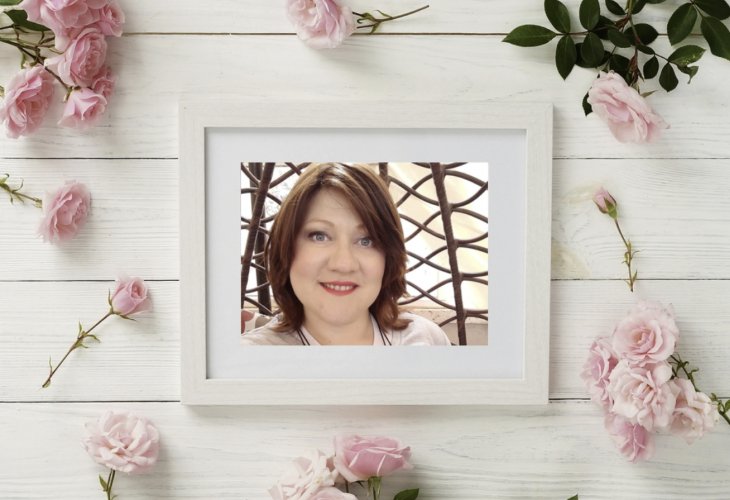 Hannah Breutman
If you were to meet Chana Brotman on the street — walking briskly with her six children in tow, trying to answer an urgent phone call from a preschool teacher seeking her professional advice, or responding to one of the women she is guiding through a personal coaching process, you would find it hard to believe that this energetic woman did not grow up in Israel, and that for many years of her life she was far removed from Judaism.
In truth, Chana's rolling accent is the only clue. “I managed to integrate into Israeli society and build my home here,” she says with a smile as she shares the remarkable and almost unbelievable story of her journey back to Judaism, “but the accent is something I just couldn’t let go of.”
Far from Judaism
Chana was born 38 years ago in Donetsk, Ukraine. “I grew up in a family that was completely disconnected from religion and tradition,” she explains. “That wasn’t unusual — almost all the Jewish families in our area were like that. My great-grandmother came from a religious family and observed Torah and mitzvot, but my parents were already totally detached from Judaism. I was the fourth generation of disconnection.”
Did You Know You Were Jewish?
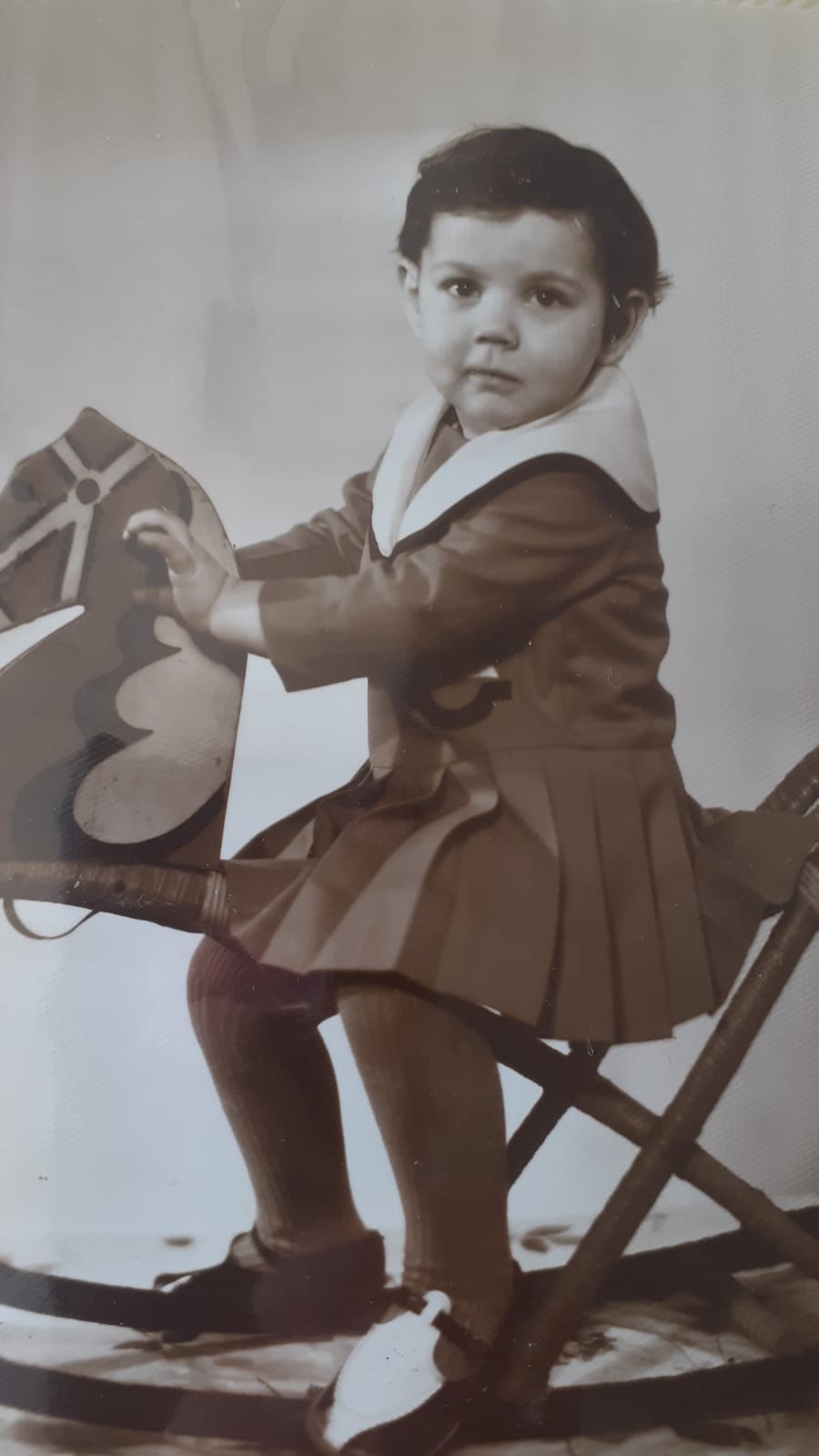
“Yes,” Chana says. “From a very young age I knew I was Jewish. Even more than that — I felt a direct connection to God. As a little girl, I had a burning desire to pray, but I didn’t know to whom one prays or how to do it.
“I remember that when I was about seven years old, I convinced my grandmother to buy me a New Testament along with a small ‘prayer booklet’ — like a children’s siddur. From that booklet I learned to say Shema Yisrael in Ukrainian translation, and I mainly read from the New Testament. I don’t have a logical explanation for this, but whenever I read the New Testament, I was deeply moved by the stories of the Bible and the Five Books of Moses. Yet when I reached passages connected to Christianity — something inside me stopped me. I simply couldn’t continue.”
She recalls a great deal of religious confusion at home. “For example, on Passover my grandmother would bake matzah and bring it to us wrapped in a white pillowcase. We would share the matzah with our neighbors, and they would give us painted eggs and cakes they prepared for Easter. We actually had good relationships with them, mainly because they loved my grandmother. Everyone in the neighborhood said: ‘Jews are liars and stingy — but your grandmother is special, not like the others.’”
Experiences of Antisemitism
“The Iron Curtain fell when I was very young, so I don’t really remember what life was like before that,” Chana says. “After it fell, there weren’t many overt expressions of antisemitism. I was almost the only Jewish student in my school, but aside from occasional insults, being rejected from a dance class because ‘we don’t accept Jews,’ and one teacher who repeatedly asked me why we weren’t moving to Israel, I didn’t encounter much antisemitism. I also don’t have a typically Jewish appearance, so it wasn’t obvious at first glance.”
However, one incident remains deeply etched in her memory.
“My grandmother was hospitalized in her later years and needed a specific medication that wasn’t available. My grandfather knew how important it was and asked her roommate if he could buy the medicine from him. The man asked my grandfather, ‘What’s your last name?’ After hearing it, he asked, ‘Are you Jewish or German?’ When my grandfather answered that he was Jewish, the man refused to sell him the medication — even when my grandfather offered double the price. My grandmother passed away that same day. It’s one of the hardest memories I carry with me.”
A Growing Pull Toward Judaism
After the Iron Curtain fell, almost all of Chana's relatives moved to Israel, but her immediate family remained in Ukraine. “Suddenly religion became a big topic,” she explains. “My classmates brought all kinds of religious texts, but nothing spoke to me. I felt a strong connection only to Judaism. I knew it was the only thing that truly interested me.”
At that time, Chana attended a Sunday school and joined the global Ezra youth movement. “Counselors came to us, sang songs, and told stories in Hebrew. That’s when I started to feel a deep emotional bond with Judaism, and the desire to move to Israel began to grow inside me.”
That year she was invited to a Jewish summer camp. “It was incredible,” she recalls excitedly. “For the first time I met so many Jewish children like myself. Suddenly I wasn’t different — I was part of a group. It was a powerful experience.”
Even so, she says, Judaism still felt attractive but not yet binding. At the same time, she attended meetings with Christian youth groups.
“We read the New Testament, discussed each verse, and then prayed a personal prayer that was ‘passed on’ through a mediator. I could never understand why I couldn’t pray directly to God — why did I need someone else to transmit my prayer?”
One encounter changed everything. “On my way home from one of those meetings, a boy asked me, ‘Are you Jewish?’ I said yes. Then he asked, ‘And how does that express itself?’ I was twelve years old, and suddenly it hit me: my Judaism barely expressed itself at all. I didn’t have a Jewish name, we didn’t keep Shabbat or holidays. On Passover we had matzah on the table — but also chametz. I had no real Jewish identity. I never saw that boy again, and I don’t even know his name, but his question stayed with me and changed my thinking.”
A Promise in the Forest
The next turning point came at a summer camp activity in the forest.
“Suddenly a wild bull appeared and started charging. It ran straight toward me, and my friends screamed, ‘Run! Run!’ But I froze. The first thought that entered my mind was: ‘God, if You save me, I’ll keep Shabbat, kashrut, everything You want.’ At that exact moment, the bull turned around and ran the other way.”
She pauses. “Of course, I went home and forgot all about it.”
The Road to Israel
Months later, when Chana was nearly thirteen, the real opportunity arrived. “It was Passover. My grandmother had passed away, and for the first time we had no matzah at home. I volunteered to go buy some and took my birth certificate with me to prove I was Jewish. At Chabad House, a woman asked me, ‘Do you want to study in Jerusalem?’ I answered enthusiastically, ‘Of course!’ She gave me a brochure for a school for girls from the former Soviet Union called Beit Ulpana and encouraged me to ask my parents for permission.”
That same day Chana told her mother she was going — asking only that she call to confirm her consent. “To my surprise, my mother agreed without hesitation. She must have understood how important it was to me.”
Chana went through the Na’aleh program and soon received approval to immigrate to Israel, alone.
Growing Through Commitment
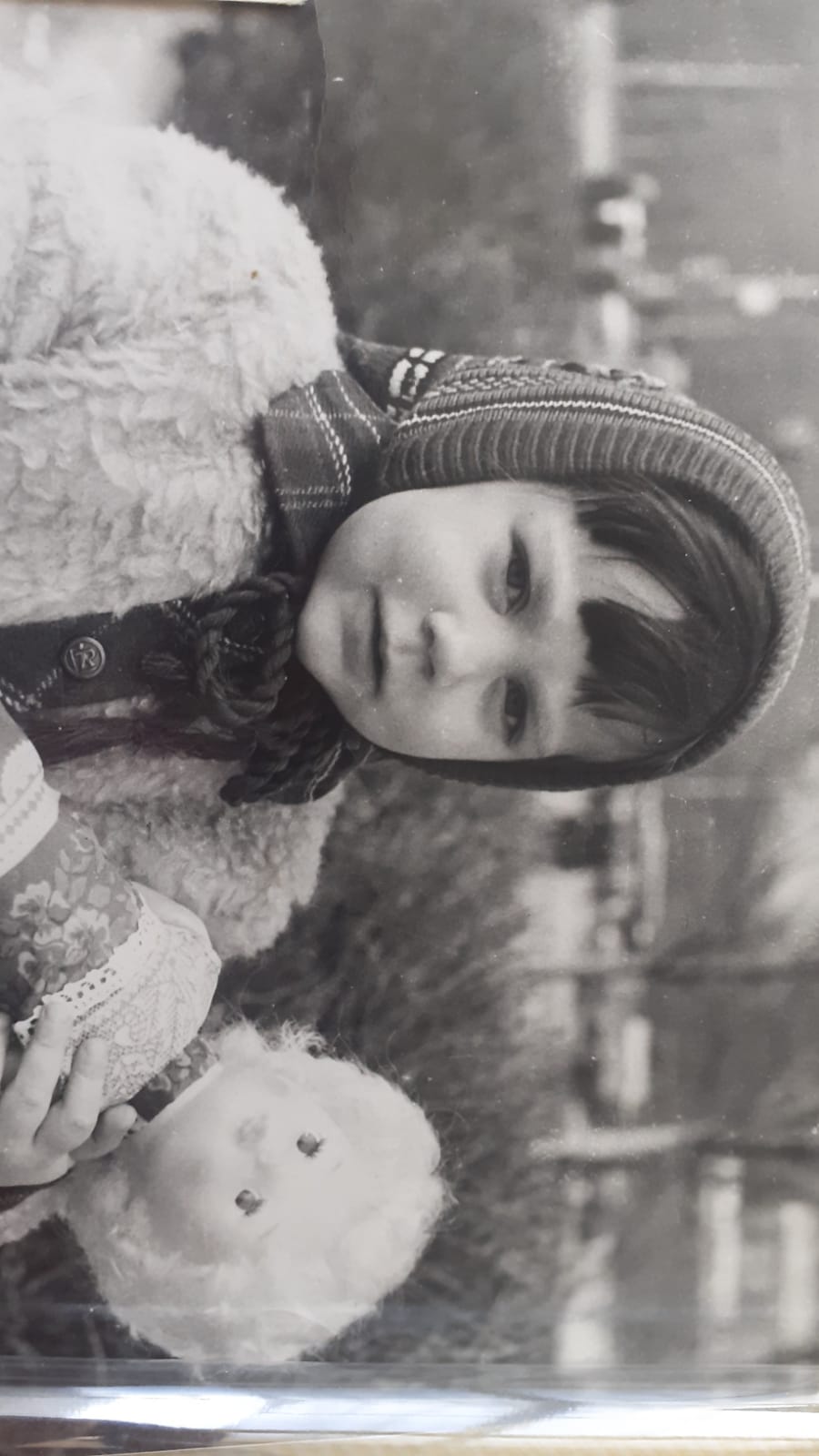
“I barely knew Hebrew,” she recalls, “but living at the ulpana was a huge advantage. All the girls had similar backgrounds. We grew together spiritually.”
When she returned home after the first year, she told her mother:
“I love you very much, but I can’t eat your cooking anymore. There’s something called kashrut, and I keep it now.”
Her mother responded with remarkable sensitivity — preparing meals from canned foods and even letting Chana take over the cooking so she could keep kosher.
Chana continued her studies in Israel for three more years. After the fourth year, instead of returning to Ukraine, her mother came to visit — and eventually made aliyah herself.
“How did you find the strength to do all this at such a young age?”
Chana posed that same question to the principal of her ulpana.
“She told me: ‘It seems you have a grandfather or grandmother in Heaven who is crying for you. They haven’t given up.’ That answer shook me to the core.”
A Calling: Helping Children
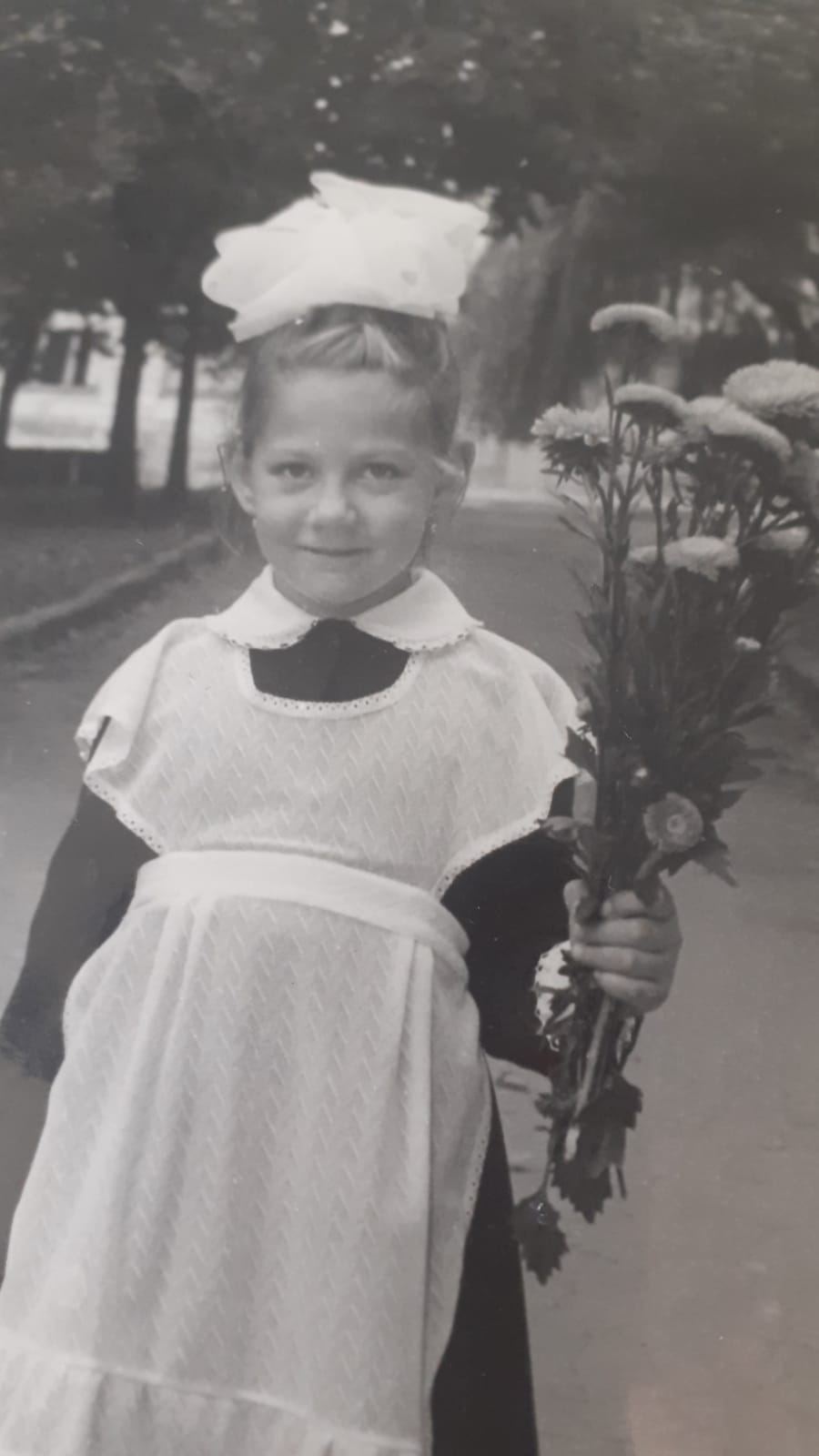
At age 24, Chana married — her husband also returned to Judaism and came from Ukraine. She earned degrees in educational counseling and Jewish studies.
Today, Chana works primarily as an early childhood counselor. She recently developed a game called “Pantoregesh”, designed to build emotional intelligence in children.
“The game teaches children to name their emotions,” she explains. “Even very young kids learn to express how they feel instead of hitting or crying. That’s exactly the process I wanted to create.”
Living a Life of Purpose
“My aspiration is to help children as much as possible,” Chana says. “I see it as a tremendous privilege. And when it can be done through Torah and mitzvot — there’s nothing more wonderful than that.”

