
History and Archaeology
The Golden Bells of the High Priest: Hidden Meaning and a Remarkable Discovery in Jerusalem
From Rashi’s divine insight to a 2,000-year-old bell unearthed in the City of David, uncover the symbolism, history, and spiritual depth behind the robe and ephod of the Kohen Gadol
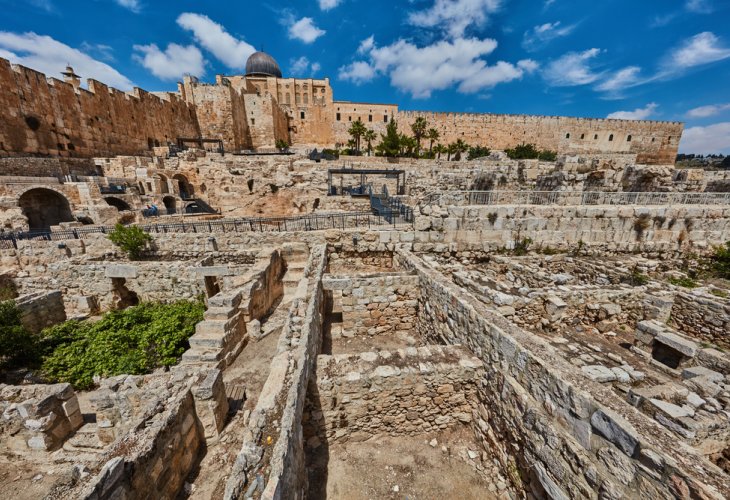 (Photo: Shutterstock)
Out of the eight garments of the Kohen Gadol (High Priest), two were directly connected: the robe and the apron. The robe was the garment to which the apron was fastened — hence its name, the robe of the apron.
The great commentator Rashi struggled to visualize exactly how the apron was designed from the Torah’s description. One day, as he walked through the street, he saw a noblewoman wearing a garment shaped like an open apron — and suddenly the vision became clear to him. From Heaven, he was shown the image of the apron connected to the robe.
The Sound of Sanctity
Around the hem of the High Priest’s robe were golden bells and decorative pomegranates, as the Torah says: “His sound shall be heard when he enters the Sanctuary” (Shemot 28:35). The purpose was twofold — to announce his arrival out of respect for the Holy, and to teach, as Rabbi Yosef Bechor Shor writes, “proper manners — that a person should not enter even his own house, and all the more so another’s, suddenly and without knocking.”
The Sages add that the robe atoned for the sin of lashon hara (evil speech). One who gossips does so secretly, hoping not to be heard; but the High Priest entered the Sanctuary openly, with every step ringing clear — a symbol of transparency, dignity, and holiness.
The Deeper Symbolism
Rabbeinu Bachya explains: “His voice shall be heard when he enters the Holy” — meaning, through fulfilling the mitzvah of wearing this divinely commanded garment, the High Priest’s prayers would be heard in Heaven, bringing forgiveness for the entire nation of Israel.
Why pomegranates? According to the great Chassidic masters, the pomegranate represents the Jewish people — even those distant from Torah. Just as every pomegranate is filled with countless seeds, so too “even the sinners of Israel are full of mitzvot like a pomegranate.” Every Jew, therefore, has a share in the High Priest’s sacred service.
The Rashbam adds another practical reason for the bells: as no one else was permitted in the Sanctuary when the High Priest entered, the bells signaled to everyone to withdraw. The pomegranates were placed between the bells to soften the sound, ensuring it was gentle and respectful rather than harsh.
According to the Tosafists, the ringing bells even served a spiritual purpose — to alert the ministering angels to make way for the mortal entering the Holy of Holies.
The Ramban (Nachmanides) offers a unique view: that the bells were set inside hollow pomegranate-shaped ornaments — a single combined design. However, he notes that most of the Sages understood the verse literally, as describing separate bells and pomegranates. Interestingly, in the Letter of Aristeas, a Hellenistic Jewish text from the Second Temple era, the High Priest’s garments are also described with distinct golden bells and embroidered pomegranates, admired for their splendor and symbolism.
A Voice from 2,000 Years Ago
About fourteen years ago, during excavations in the City of David in Jerusalem, archaeologists discovered a small golden bell, about one centimeter in size, inside an ancient drainage channel that once carried rainwater from the Temple Mount.
The archaeologist Eli Shukron, who uncovered the artifact, suggested it may have been one of the bells from the High Priest’s robe. He explained: “An archaeologist can dig his whole life and never find something like this. We found the bell intact, with its loop still attached for sewing onto a garment. Such bells would have hung from the robe of a distinguished person — when he walked, the bells would chime softly, signaling his presence. It’s amazing to hear the same sound that echoed here 2,000 years ago. Perhaps this very bell fell unnoticed from the robe of the High Priest himself.”
The Prayer of the Bell
May it be God’s will that this faint ring of a golden bell from the Temple, soon grows into a mighty sound, the shofar of Mashiach, heralding the restoration of the High Priest’s service and the renewal of divine worship in Jerusalem.

