
History and Archaeology
Bread From Heaven: The Miracle of Manna and Its Echoes in the Modern World
How ancient sages, explorers, and journalists describe the taste, texture, and mystery of the food that sustained Israel for forty years
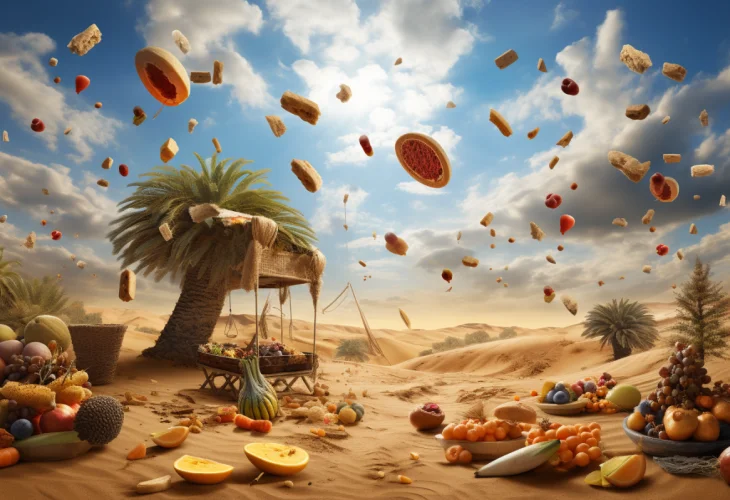
One of the greatest wonders and acts of kindness God performed for Israel during their journey in the desert was the manna. “For forty years the Israelites ate the manna, until they came to an inhabited land.”
This miracle has no natural explanation. It wasn’t a vision in the sky or a one-time phenomenon, but forty years, every single day of food for an entire nation. This was no illusion; you cannot feed people with a trick. Two days without real, nourishing food and a nation could not survive the desert.
Researchers and scientists have attempted various theories, but none of them can truly explain how a whole people survived on such food for decades. Scientific suggestions might be interesting as curiosities, but not as explanations. It is clear that the manna was a miracle on a scale unseen before or after.
Do Traces of Manna Still Exist Today?
Modern scholars investigated the manna, but also Jewish sages also discussed it for centuries. According to their writings, traces of manna-like substances can still be seen in the desert each year. From this perspective, the miracle of the manna was the vast and sufficient quantity, while the existence of the substance itself is a natural phenomenon.
About 800 years ago, Rabbi Petachia of Regensburg, who traveled from the Rhine region (Germany–France border) to the Land of Israel and its surroundings, described manna-like grains that fell annually in the Sinai Desert. Rabbi Petachia — brother of Rabbi Yitzchak the White of the Tosafists, was a great scholar. His travel diary, “The Travels of Rabbi Petachia,” is a fascinating historical record of the region.
While in Sinai, Bedouins showed him small, white coriander-seed-like grains, telling him that each year a small amount of such grains descended with the dew, landing on plants or the ground. He recorded the description in his book.
Even earlier, Maimonides wrote: “In the deserts inhabited by the Arabs today… it is the nature of the manna to fall in those places.”
(Guide for the Perplexed 3:50)
Many later sages mentioned these yearly sightings as well. Rabbi Chaim Hezekiah Medini — Chief Rabbi of Hebron and author of the encyclopedic “Sdei Chemed”, even devoted an entire section to the halachic question: Can one fulfill the mitzvah of eating matzah using matzah made from these manna-grains?
What Did the Manna Taste Like?
Rabbi Petachia wrote: “I tasted it, and I could not withstand its sweetness.” The Sages taught that manna was such pure nourishment that the body produced no waste from it.
A Modern Taste Test: The New York Times Reports
Journalist David Arnold, an American Christian reporter unfamiliar with rabbinic teachings, was eager to taste the manna-like substance during his journey in Sinai. Lacking exposure to the traditional descriptions, he felt no particular excitement — yet he wrote in amazement:
“The texture is unlike anything else I’ve tasted — chewy and crisp at the same time. It also makes eating it highly personal, because no two people taste manna the same way. I may taste a mint-like flavor, while you may sense lemon. No other food is like that.” (The New York Times, June 8, 2010)
Those of us who grew up learning that each person tasted whatever flavor they desired in the manna can’t help but feel a renewed longing to taste this extraordinary bread from heaven — assuming, of course, that these modern grains truly have some connection to the miraculous manna our ancestors ate in the desert.

