
History and Archaeology
The Story of WEIZAC: How Israel Built Its First Computer
Discover the origins of Israel’s computing era at the Weizmann Institute
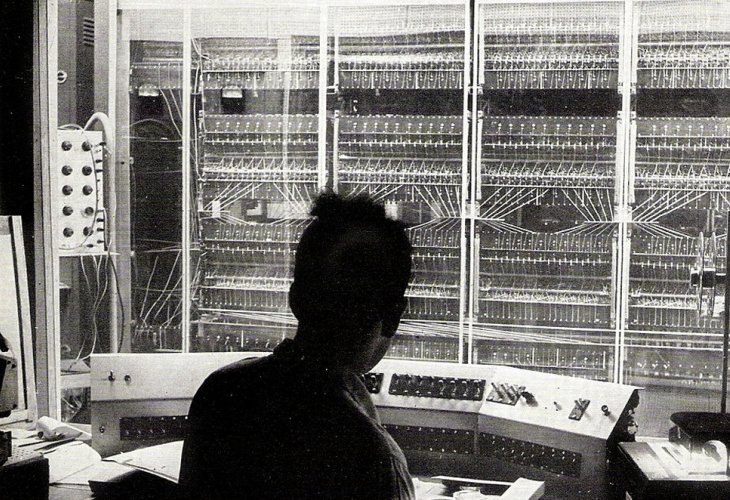
In an era when almost every person carries a computer — often literally in the palm of their hand, it’s hard to imagine that only 70 years ago, Israel received its very first computer. And it looked nothing like the home computer you use today.
WEIZAC — Israel’s first computer, was named as an acronym for Weizmann Automatic Computer. It was activated on 30 Tishrei 5716. WEIZAC was the first computer in Israel and among the very first in the entire world. Its construction cost about $50,000 — equivalent to roughly half a million dollars today. The machine was enormous, occupying an entire hall. Today, one remaining part of the original computer is displayed at the Weizmann Institute of Science — and that piece alone covers an entire wall.
Professor Chaim Leib Pekeris, who founded the Department of Applied Mathematics at the Weizmann Institute, was one of the key figures behind the development of the computer. This massive machine operated using 12 vacuum tubes and capacitors. Data was fed into it using punched cards, which were also used to input commands. Remarkably, the basic architecture of WEIZAC still forms the foundation of modern computer design.
The computer’s role was to perform complex calculations. Most of its operating time was devoted to scientific research at the Weizmann Institute, but other organizations were granted scheduled usage as well — such as the IDF, the Central Bureau of Statistics, companies involved in mining and oil exploration, and researchers from other universities.
Only six years later, another computer was purchased for the IDF’s MAMRAM unit. The first computer, WEIZAC, continued running for about eight years. After it was retired, it was replaced by a newer computer also built at the Weizmann Institute, called “The Golem.”

