
Faith
From Darkness to Light: The Spiritual Journey of Artist Simcha Even Chaim
How a tragic loss, a search for meaning, and a moment of awakening in India led one Israeli artist to faith, healing, and a powerful new artistic mission
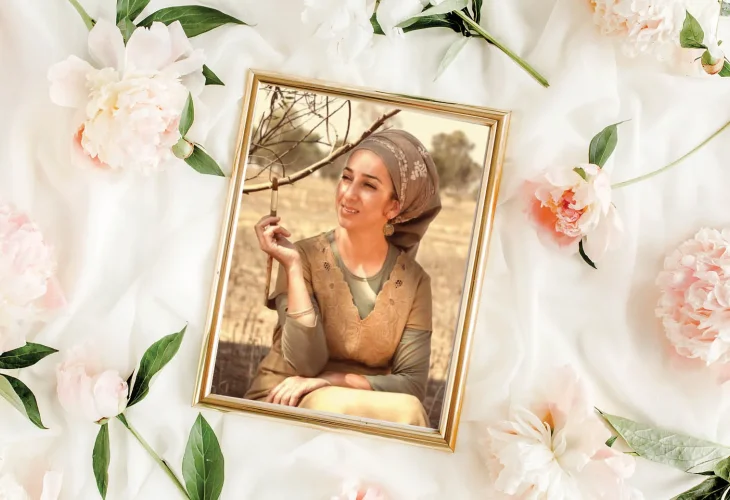
It is hard to believe that Simcha Even Chaim — the gifted artist whose every painting radiates emotion and professional mastery — never engaged in art at all as a child or teenager.
She grew up in Be’er Sheva in a traditional home, living a normal and ordinary childhood. But at age 19, her world was shattered when her brother passed away in a tragic incident, leaving her family stunned and heartbroken.
“My brother was an extraordinarily talented painter who lived and breathed art,” she explains. “He had a rare and exceptional gift, and our home was always filled with the smell of oil paints that seeped into my soul. My brother painted all day, without stopping. When he spoke to me — he painted me. When he ate lunch — he painted the food on the plate. But it seems that this very sensitivity also harmed him, because he struggled to survive the difficulties of the world, and that is how the tragedy happened.”
The Hidden Ways of God
“After my brother passed away, I struggled to return to normal life,” Simcha shares. “So many questions overwhelmed me — I couldn’t understand why the world is so big and full of pain, why there is evil, why life is harsh. What happens after death? How is it possible that a living, breathing human being disappears from the world? Where is he now?”
“Of course I tried searching for answers. At first I turned to philosophy. I read research books and tried to find meaning through them. As part of my spiritual search I also traveled to India three times after the army, hoping to find purpose. I had a deep longing for truth, and a pain of loss and emptiness I tried to fill. I practiced meditation hoping it would help me understand what was happening in this confusing world around me.”
The Urge to Paint
“About three years after my brother died, one day I took his paints, his brushes, and all his art supplies,” she recalls. “Driven by an unexplained urge, I ran to a store, bought a small canvas, returned home, opened the paints — and began to paint.”
“It was incredible — I had never learned to paint professionally, yet suddenly a painting emerged from me like someone who had studied for years. It was a gift straight from Heaven. From that moment, painting became the center of my life. I enrolled in art studies at the university in Be’er Sheva — the very same school my brother had attended. I followed his path, and amazingly, our first paintings were extremely similar.”
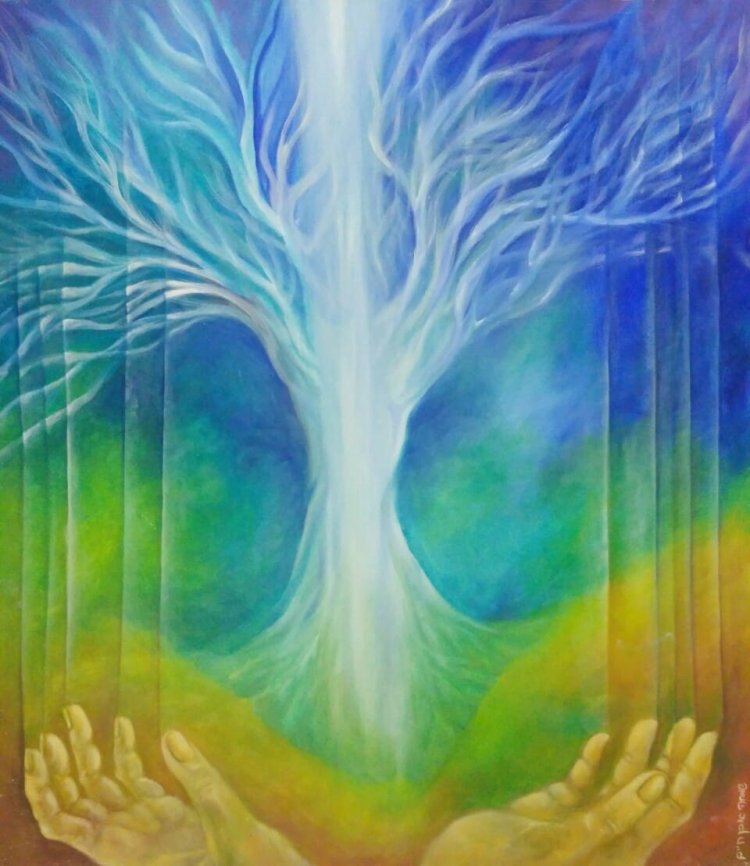
Those early paintings were full of her inner questions. “I painted my confusion and my searching — dense pages filled with question marks. In every painting, I tried to find the light within the darkness, and felt disappointed when I couldn’t always capture it.”
Trapped in India
On her third trip to India, she planned to visit a place she had never been before — Varanasi.
“Most travelers went there, and I wanted to as well. But when I arrived, I immediately felt I didn’t want to be there. It was a place filled with idol worship in its starkest form. I felt like I was walking inside spiritual impurity, and it chilled my heart.”
“For the first time, I understood why idolatry is called ‘foreign worship’ — because it is so foreign, so not us. The more I walked, the more repulsed I felt. I wanted to go home. But then the monsoon rains began. The entire city shut down, like under siege. I couldn’t even leave my hotel room.”
“I felt imprisoned. All I wanted was to return home. I spent my time reading a small Tehillim (Psalms) book I had brought from a Chabad house.”
“At first I didn’t understand a word. But the more I read, the more something awakened in me. The holy letters began to shine. To this day I cannot explain exactly what happened — but I felt an illumination. My longing for Israel grew stronger and stronger. After two weeks of monsoon rains, I finally managed to buy a ticket. Even though it cost a fortune, I didn’t care — I just needed to leave.”
“When the plane landed in Israel, I literally ran out and kissed the ground, tears streaming down my face. I missed the Land so deeply.”
Shabbat Back Home
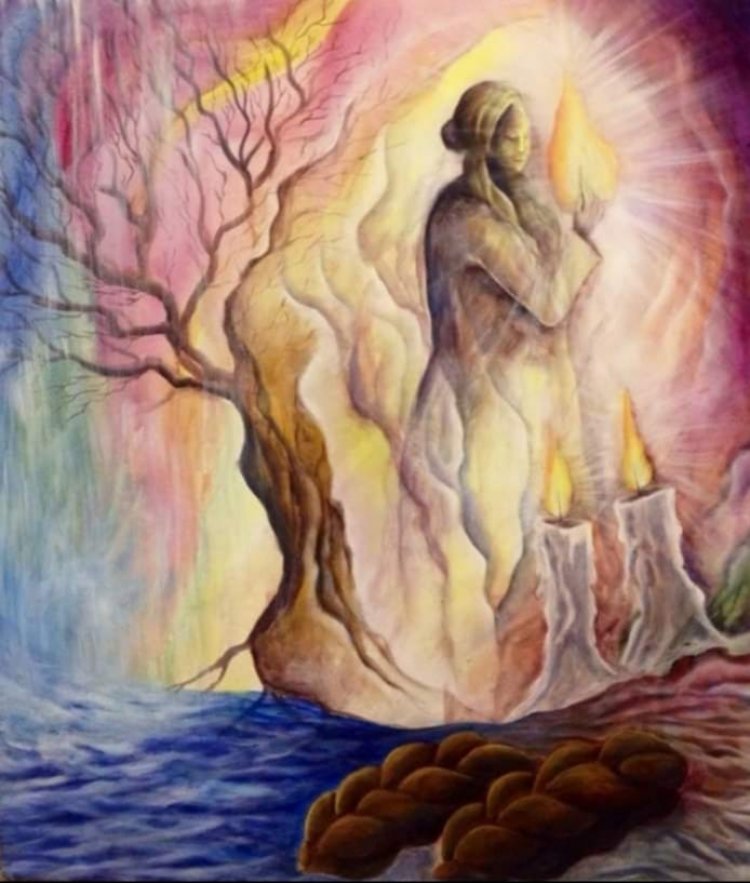
“It was the Friday night of Parashat Noach. I sat on our balcony in Be’er Sheva, looking out at the endless desert. Suddenly I felt a beam of light shining toward me and an inner voice calling: ‘Shabbat HaMalka, the Shabbat Queen.’ I jumped up and ran inside shouting, ‘Mom, when is Shabbat coming in?’ I saw her lighting candles and said, ‘I want to light too.’ And then I declared to everyone: ‘I want to keep Shabbat, and Hashem will open the gates of heaven for me.’”
That Shabbat — Parashat Noach — was the first Shabbat she ever kept.
“I didn’t yet know all the laws, but I didn’t turn on lights, I didn’t go out to socialize like I used to, and in the morning I went to shul. When they took out the Torah from the ark, tears streamed down my face uncontrollably. As they began reading Parashat Noach, I suddenly understood: Hashem opened the ark for me, and brought me into His home.”
Painting From the Soul
After her return to observance, Simcha suddenly stopped painting.
“People around me didn’t understand why — but I did. My paintings came from a place of confusion, from inner chaos, from searching for meaning. Once I found truth and Judaism — I didn’t need the paintings anymore. A quiet settled inside me.”
Instead of painting, she devoured Jewish texts — Chumash, Prophets, Tehillim.
“I read them like mystery novels. The more I read, the more light entered me. Because I’m a visual person, I could picture everything in the Torah so clearly — it was like stepping inside a living, dreaming world.”
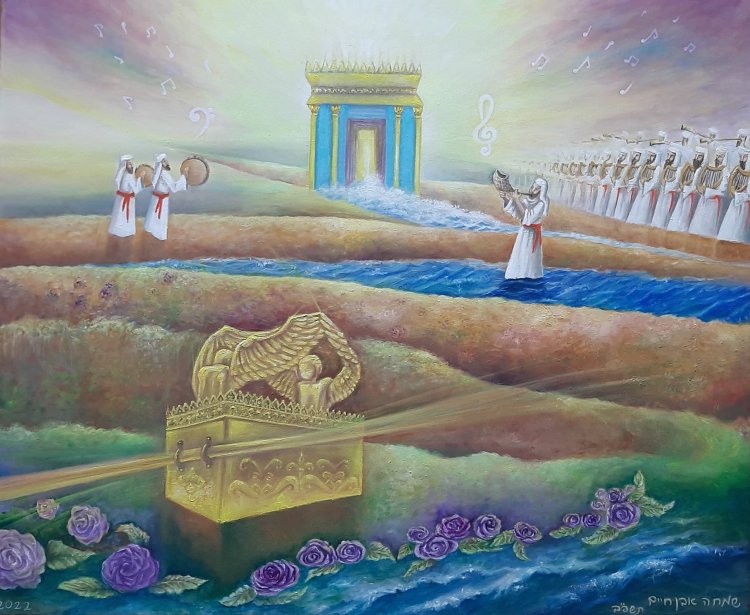
A few months later, the urge to paint returned — but this time she understood it was a calling from God. “I realized that painting was a gift Hashem gave me, and I must use it to bring holiness into the world. So I returned to painting — but with a new mission.”
Today, her art is deeply spiritual.
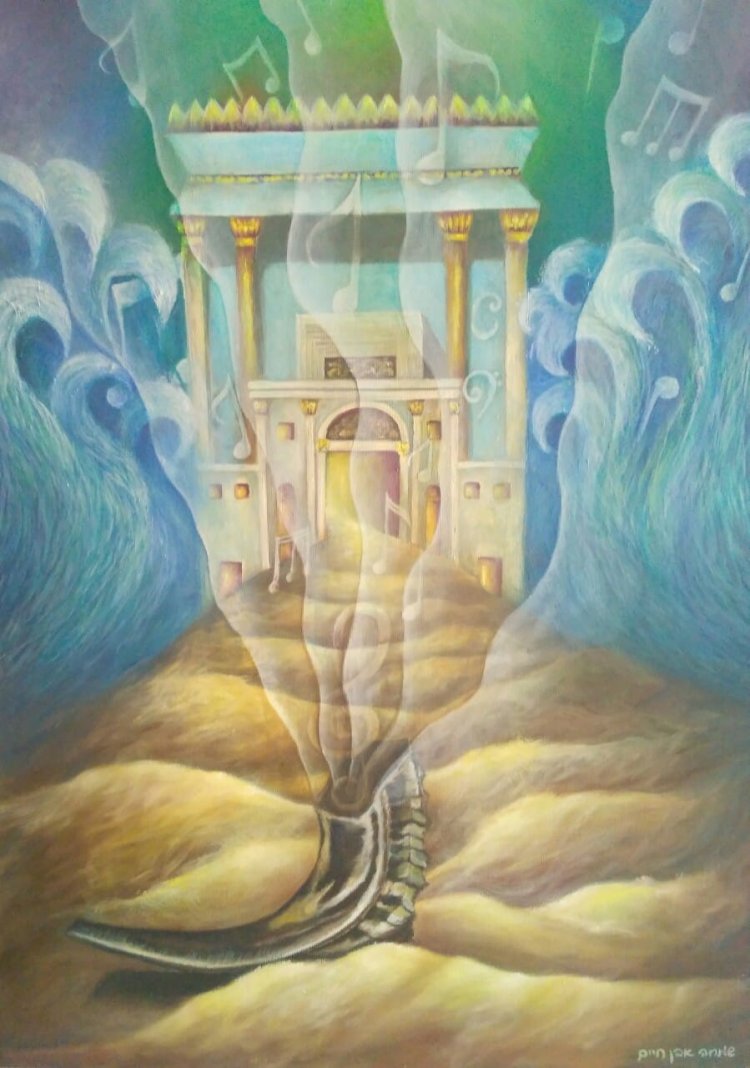
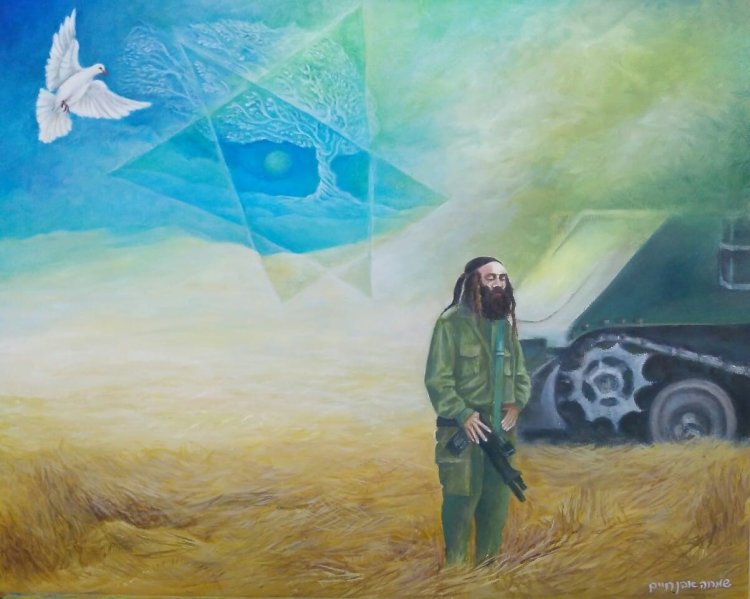
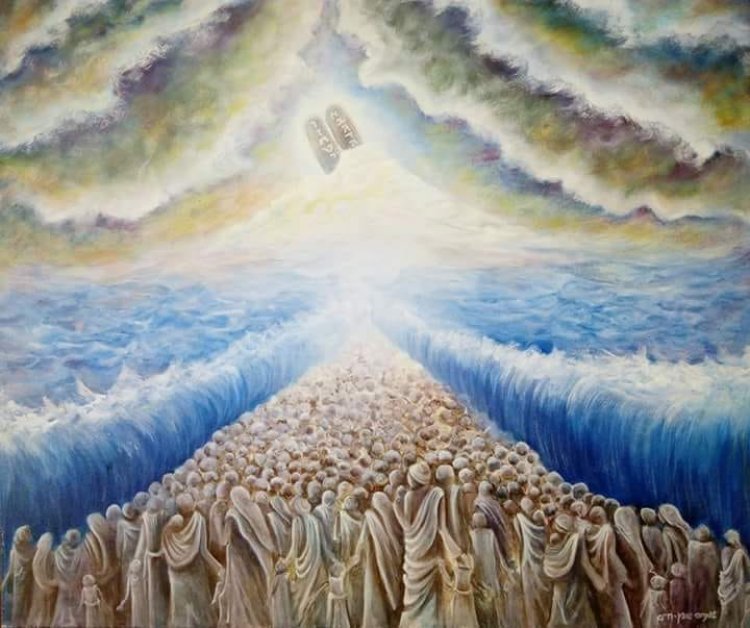
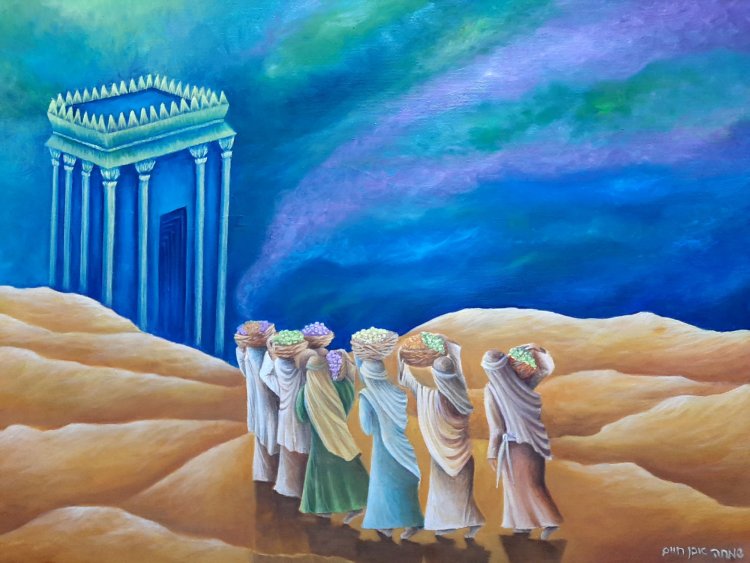
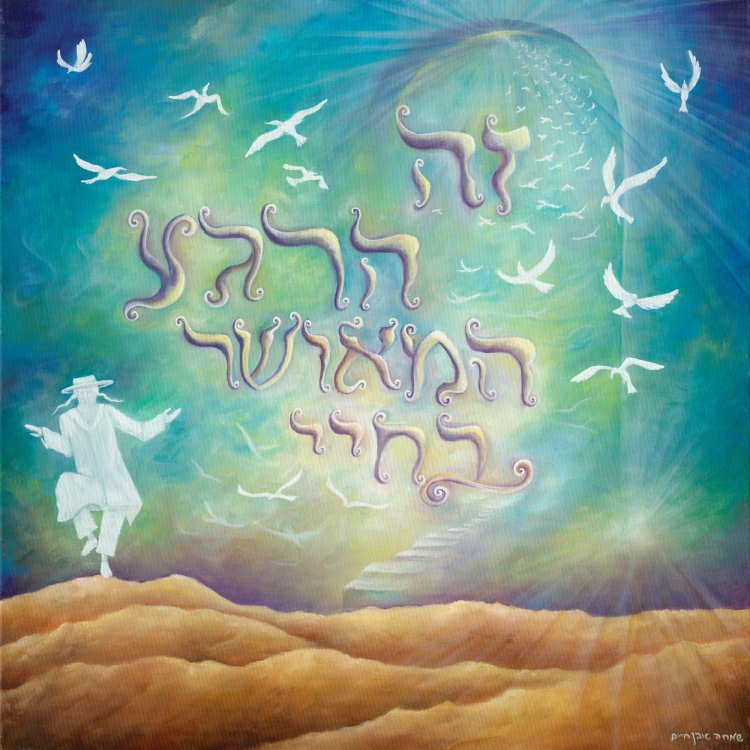
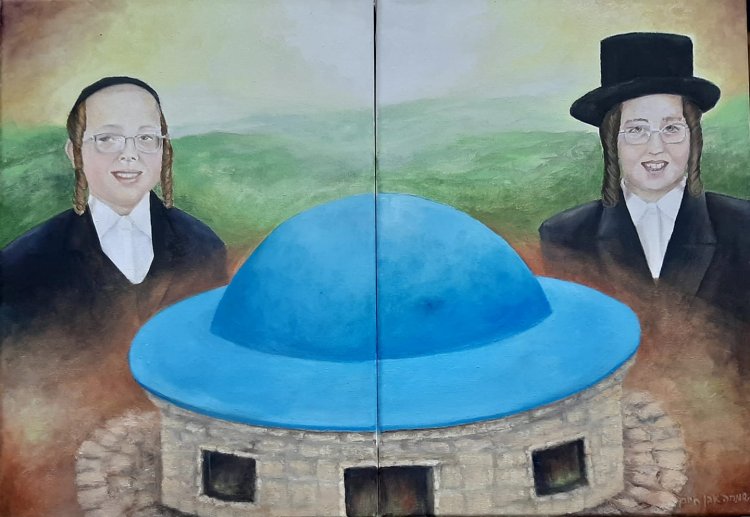
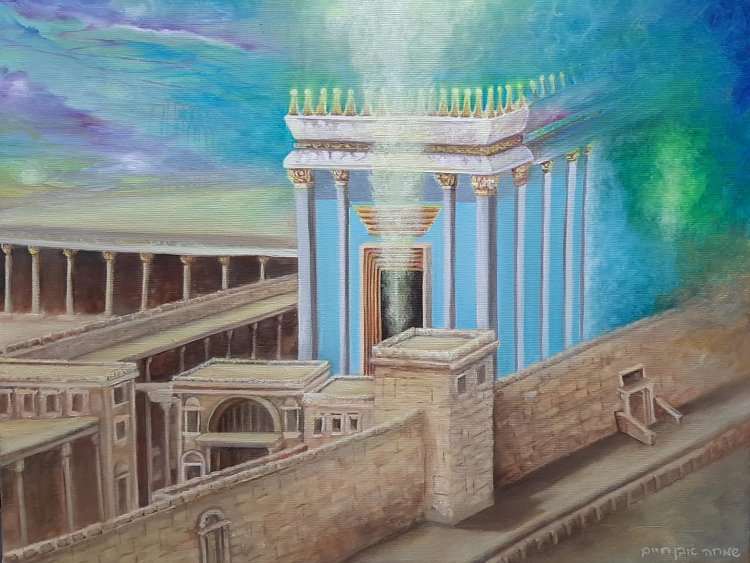
“I paint scenes from Bereishit, Miriam singing at the Sea, the vision of Yechezkel, the Beit HaMikdash. Living for 13 years in Israel’s southern communities, especially after recent events, the longing for redemption is so strong — and it comes out in my art.”
As a wife, mother, and artist, she now understands her purpose: “Painting is the tool Hashem gave me to reveal light in the world, to bring people closer to Him. I’m blessed that the thing I love most is also what connects me to God.”
Today, her exhibition “Orot Gvohim — High Lights” is displayed in the Heichal Shlomo Museum in Jerusalem.
“Jerusalem has always been the center of my heart,” she says. “I’ve painted her so many times. To now display my work there — it feels like a circle closing in the most beautiful way.”

